Play Nine: Golf Card Game
BonfitCard
4.5926.00 Reviews
- Version
- 5.13
- Installs
- 100.00K
- Age Rating
- Everyone
Screenshots


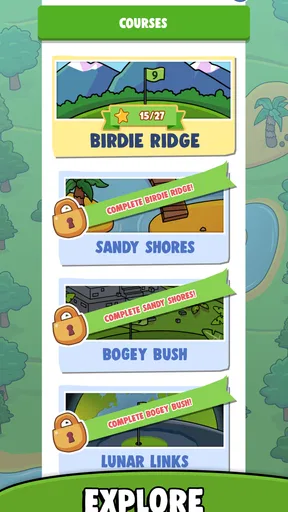

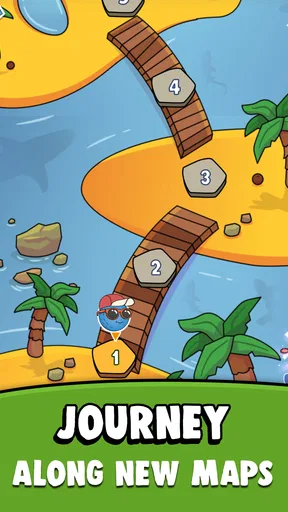
Our Review of Play Nine: Golf Card Game
 Analysis by Appyee
I found Play Nine: Golf Card Game most enjoyable when I treated it as a quick social card game rather than a serious golf simulation. It borrows the language of golf—trying to finish with the lowest score—but the actual experience is about choosing when to replace cards, when to protect a promising layout, and how much risk to accept before the round ends. That gives it an easy starting point and enough decision-making to keep a relaxed group interested.
Bonfit’s game is free to download, aimed at Everyone, and sits in the card-game category. It has built a sizeable audience, with over one hundred thousand installs and an average score of 4.5 from around eleven thousand ratings. Those figures make sense after spending time with it: the rules are approachable, turns are compact, and a new player can understand the central objective without studying a long tutorial.
My main recommendation is simple: try it if you want a low-pressure game for family time, a casual gathering, or a few spare minutes. I would not choose it for someone looking for a deep collectible-card system, a competitive strategy ladder, or a faithful digital version of golf. Its appeal comes from the small decisions inside a compact round, not from a large amount of content or complicated progression.
How the golf idea becomes a card game
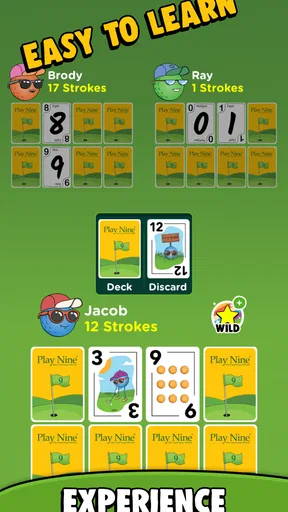
The basic concept is easy to explain. You arrange a hand of cards and try to finish with the smallest total, using the golf theme as a scoring frame. Instead of controlling a golfer or selecting clubs, I spend my attention on the value and position of the cards in front of me. Each turn becomes a short question: should I improve what I have, take a chance on an unknown replacement, or leave a decent arrangement alone?
That structure is more interesting than a simple draw-and-discard game because the cards do not feel interchangeable. A card that looks harmless in one position can become a problem when it sits beside another high-value card. The result is a gentle form of spatial planning. I am not building a complicated deck, but I am constantly trying to make the current layout less costly.
The golf theme also gives the scoring a useful personality. In many card games, lower numbers are merely better numbers. Here, the connection to golf makes the objective immediately memorable. I can explain the goal to someone who has never played a mobile card game, then start playing instead of spending several minutes translating rules.
That accessibility is one of the game’s strongest qualities. A parent can introduce it to a child, friends can pass a phone around, and experienced card players can understand the rhythm quickly. The Everyone age rating fits that welcoming presentation. It feels designed for shared entertainment rather than an intense test of reflexes or a game that demands constant attention.
Why the decisions stay engaging
The most satisfying moments come from resisting the urge to change everything. When my layout contains one awkward card, replacing it may improve the round, but it can also expose me to another poor result. That tension is small, yet it gives each turn a purpose. I am not merely waiting for a lucky draw; I am deciding how much uncertainty I can tolerate.
A useful approach is to identify the card that is doing the most damage, rather than automatically chasing a perfect arrangement. This keeps the game moving and prevents every turn from becoming an endless search for an ideal outcome. In a family setting, I would encourage new players to make that one-card assessment first. It teaches the central trade-off without turning the table into a lecture about strategy.
Another practical habit is to remember the overall score you are trying to protect. A modest improvement can be better than a dramatic gamble late in a round. I found this especially useful when playing with people who prefer predictable choices. The game allows cautious players to participate meaningfully, while risk-takers still have room to make bold replacements when they are behind.
This balance is why the experience works better with several personalities at the table than its simple rules might suggest. The cautious player has a reason to hold steady, the gambler has reasons to chase a better result, and the analytical player can think about card positions and likely outcomes. Nobody needs the same style to enjoy the round.
What makes it useful in everyday play
I can imagine opening it after dinner when nobody wants to commit to a long board game. A family could play a round while waiting for food, or two friends could use it as a relaxed conversation game because turns do not require total silence. It also suits the awkward gap before an appointment better than a larger strategy game, since the central action is easy to resume after a distraction.
That convenience is more important than it sounds. Many mobile card games are technically simple but create pressure through timers, complicated menus, or constant rewards. Play Nine works best when I approach it as a self-contained pastime. I can focus on the cards and the people around me instead of learning a broad ecosystem.
For a group introducing the game to children, I would suggest playing the first round openly and explaining why a replacement is attractive or dangerous. That turns the first game into a shared lesson. Afterward, let each player make independent choices. The rules are light enough that children can start experimenting quickly, while the golf-style scoring gives adults a clear way to discuss why a low total matters.
It can also work for players who normally avoid card games because they dislike memorizing elaborate combinations. There is no need to learn a large vocabulary of special effects before making a sensible move. The challenge comes from evaluating the current arrangement, which makes the game approachable without making every decision meaningless.
The friction I noticed after the novelty faded
The same simplicity that makes the game friendly can limit its long-term appeal. Once I understood the basic rhythm, the experience became less about discovering new systems and more about repeating the familiar decision cycle. That is fine for short sessions, but players who need constant unlocks, evolving decks, or a deep competitive structure may find the loop too narrow.
I would also be careful about expecting a full golf atmosphere. The theme gives the scoring a recognizable frame, but this is fundamentally a card game. Someone searching for courses, club selection, shot physics, or a detailed sports career should choose a golf game instead. The title’s theme helps explain the objective; it does not transform the experience into a sports simulation.
There is another trade-off in the social design. The game is strongest when the people playing are willing to talk, compare decisions, and enjoy the small suspense of a replacement. If I want a solitary game with a rich campaign, the same features feel less important. The compact rounds can be convenient, but they do not automatically provide a strong personal progression arc.
Because it is free, the game is easy to try, but in-app purchases range from $1.99 to $39.99 per item. I would approach those purchases deliberately rather than treating them as part of the basic requirement. The free entry point is a genuine advantage for testing the game with friends, while anyone who dislikes optional spending in casual games should keep that consideration in mind before committing to a longer session.
The game’s current version is 5.13, and it requires Android 8.0 or later. That makes checking the device requirement worthwhile before planning a group session. If the game is being installed on an older phone or tablet, compatibility should be considered first, especially when the device is the only screen available for everyone.
How it compares with familiar alternatives
Compared with traditional card games, Play Nine offers a more guided objective. In a standard hand of cards, players may need to agree on a scoring system or remember a larger rule set. Here, the low-score goal and golf framing provide direction immediately. The cost is that there is less room for house-rule creativity and less variety than a broad deck of traditional games can offer.
Compared with solitaire-style mobile games, it has a stronger social identity. Solitaire is often better when I want a quiet solo puzzle with complete control over the pace. This game is more appealing when I want to discuss a move, watch another player take a risk, or create a small shared competition. If playing alone is the main goal, the choice depends on whether the golf-card scoring itself is enough to hold attention.
Compared with collectible card games, it is far less demanding. There is no need to construct a deck, study a large card pool, or keep up with a changing competitive environment. That is a strength for families and casual players, but a weakness for people who enjoy long-term mastery through deck building and highly specialized strategies.
It also differs from fast action card games. The appeal here is not speed or reflexes; it is the pause before committing to a change. Players who want rapid matches and constant visual stimulation may find the pace too measured. Players who prefer a calm game with room to talk will probably appreciate that restraint.
Who should install it
I would recommend it to families, couples, and friend groups looking for a straightforward card game that can be explained quickly. It is particularly suitable when players have different experience levels. A newcomer can make reasonable choices almost immediately, while a more experienced player can still think about risk, position, and the value of a small improvement.
It is also a good fit for people who like games with a clear finish. The structure does not ask me to maintain a long campaign or remember a complicated collection between sessions. I can play, compare the result, and stop without feeling that I have abandoned a larger obligation. That makes it useful for short breaks and informal gatherings.
I would skip it if your priority is a rich solo adventure, a serious golf simulation, or a deep card battler with extensive customization. I would also hesitate to recommend it to anyone who becomes bored when a game’s central loop remains stable. The title’s charm depends on enjoying repeated low-stakes decisions, not on expecting a constant stream of new mechanics.
For new players, my best advice is to focus on reducing the largest source of points first, avoid changing a reasonably good layout without a clear reason, and treat a risky replacement as a choice rather than an obligation. Those habits make the game easier to read and help prevent the common mistake of chasing an imagined perfect hand when a solid result is already available.
My final view after playing
Play Nine: Golf Card Game succeeds because it knows what kind of entertainment it wants to provide. It is a casual card game with a golf-inspired scoring idea, not a sprawling mobile platform and not a substitute for playing golf. The rules are friendly, the decisions have just enough tension, and the format fits family sessions and short social breaks unusually well.
Its limitations are real: the loop may feel repetitive to dedicated strategy players, the sports theme is lighter than the name might suggest, and the presence of optional purchases deserves a measured approach. None of those issues ruin the experience, but they define the audience clearly.
Bonfit’s release arrived on August 28, 2021, and the game has continued to attract players since then. With a free starting point and a broad age rating, it is easy to test without making a major commitment. My clear verdict is to install it when you want a friendly, low-pressure card game for shared play, but choose a deeper card title or a dedicated golf game when you need more variety or simulation.
For me, the deciding strength is the way a very small choice can create a satisfying moment: keep the layout, or risk changing it for a better score. That is not a huge system, but it is enough to make a spare few minutes feel like a proper game. If that kind of compact decision-making sounds appealing, this is a thoughtful and accessible pick.
Verdict
Strengths of Play Nine: Golf Card Game
- Quick rounds make it ideal for short breaks or casual play.
- Simple rules are easy for beginners to learn within a few hands.
- Golf-themed scoring gives traditional card play a refreshing twist.
- Works well for relaxed solo sessions without demanding constant attention.
- Compact design keeps the interface easy to navigate on mobile screens.
Limitations of Play Nine: Golf Card Game
- Luck can have a noticeable impact on the final score.
- Strategic options may feel limited for experienced card-game players.
- Repeated rounds can become predictable after extended play.
- Some features may depend on ads or optional in-app purchases.
- Small card details may be harder to read on compact phone displays.
Other Releases by Bonfit
View All
Five Crowns: Kingdom Quest
Card4.5
Similar Picks in This Category
View All
Solitaire - Classic Card Games
MobilityWare4.6

UNO!™
Mattel163 Limited4.3

Spider Solitaire: Card Games
MobilityWare4.6

Solitaire.com - Classic Cards
Tripledot Studios Limited4.7

Plants vs. Zombies™ Heroes
ELECTRONIC ARTS4.1

Hearthstone
Blizzard Entertainment, Inc.4.1
Frequently Asked Questions
What is Play Nine: Golf Card Game, and how is it played?
Play Nine: Golf Card Game is a casual strategy card game inspired by the scoring system of golf. Players arrange cards in a three-by-two grid and try to finish each round with the lowest possible score. During a turn, you draw a card and decide whether to replace one of your face-up cards or discard it. Matching cards can cancel each other’s values, so planning your layout is important.
Can I play Play Nine offline, or does it require an internet connection?
Play Nine is primarily designed as a convenient mobile card game, making it suitable for quick sessions at home or while traveling. Some features and game modes may work without a constant connection, but online multiplayer, advertisements, account-related services, or certain updates can require internet access. It is best to open the game once while connected before relying on it offline.
Does Play Nine include multiplayer options?
Yes, Play Nine: Golf Card Game is intended to support competitive play against other people as well as casual matches. Depending on the version and platform, you may be able to play with friends locally, invite opponents, or compete through online features. Multiplayer availability can vary by device, region, and current app updates, so check the in-game options after installation.
Is Play Nine suitable for children and beginners?
Play Nine is generally easy for beginners to understand because its basic rules are based on drawing, replacing, and comparing card values. However, players still need to make strategic decisions about which cards to keep and when to take risks. The game is appropriate for family-friendly casual play, although younger children may need help learning the scoring system at first.
Are there advertisements, in-app purchases, or other costs in Play Nine?
The availability of advertisements and optional purchases depends on the edition of Play Nine you download and the operating system you use. The app may be free to install while offering ads, premium upgrades, or additional features through in-app purchases. Before downloading, review the store listing for the current pricing, permissions, subscription details, and whether an ad-free option is available.
Play our best games!


